Send Inquiry
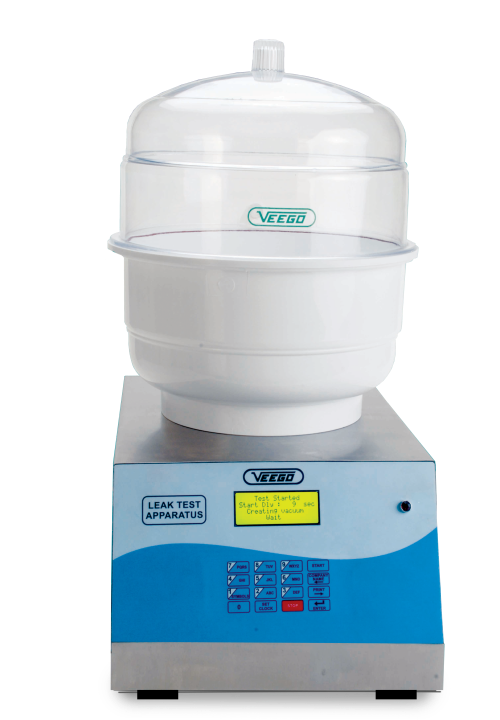
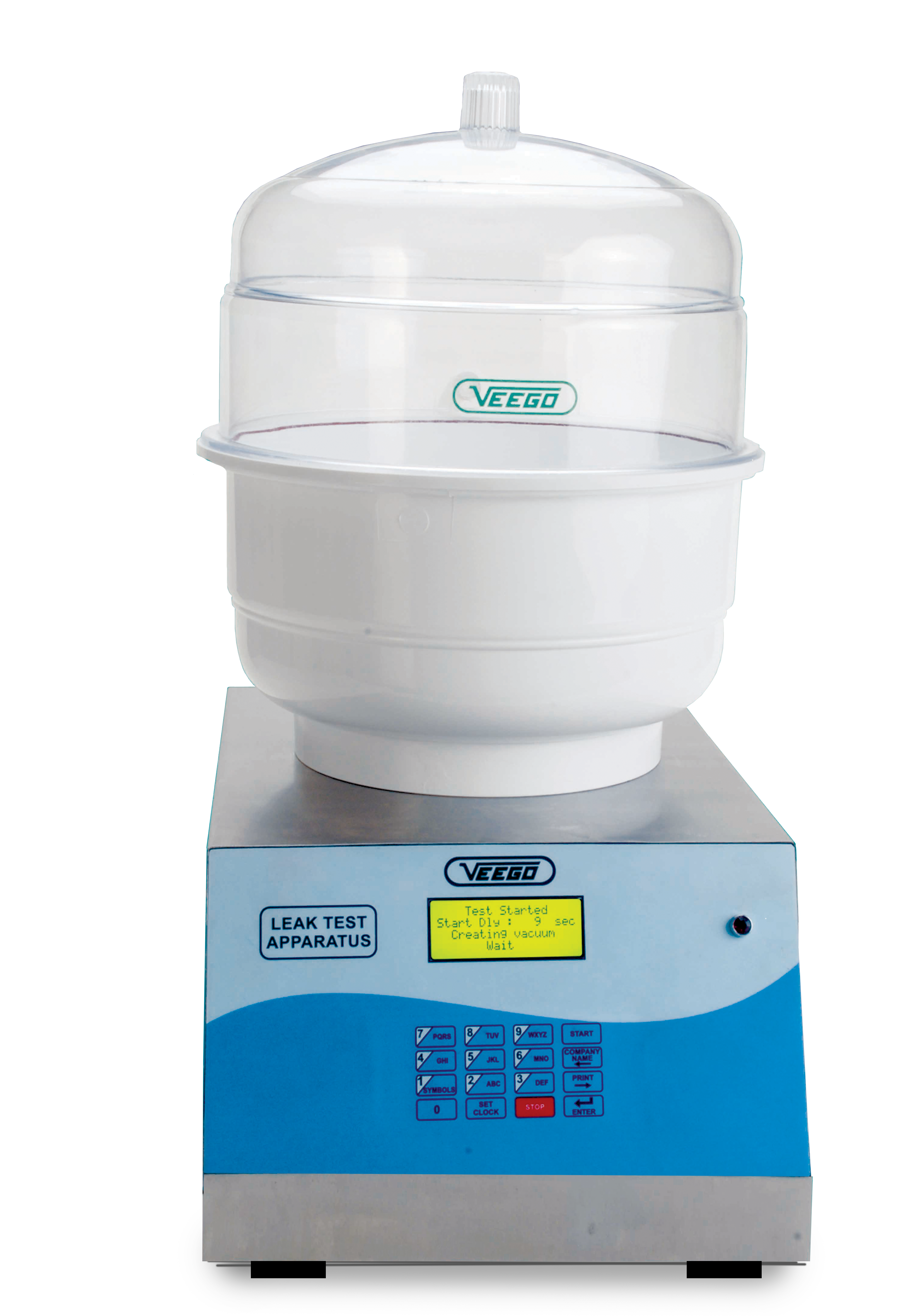


Precise Leak Testing for Pharmaceuticals
This apparatus is specially designed to test the integrity of pharmaceutical packaging like tablets, strips, blisters, and sachets. With a chamber volume of 4 liters and a built-in pressure sensor, it guarantees accurate test results. The automatic mode streamlines workflows, while the manual vacuum release offers flexibility during testing, ensuring operators get reliable outcomes every time.
Efficient Operation and Smart Controls
Convenient soft touch key controls simplify use, and real-time test readings are displayed on a large digital LED screen. The system incorporates automatic and manual vacuum release features, audio-visual alarms when each test concludes, and is safeguarded against overload and short-circuit incidents for worry-free, continuous operation.
Compliance and Durability You Can Trust
Robust construction using powder-coated mild steel ensures longevity, even in demanding lab environments. The apparatus complies with major standards such as USP, IP, and BP, making it suitable for regulated pharmaceutical use, and ensures peace of mind regarding data integrity and device safety.
FAQs of Digital Automatic Leak Test Apparatus VLT A:
Q: How does the Digital Automatic Leak Test Apparatus VLT A perform leak testing on pharmaceutical packages?
A: It subjects specimens like tablets, blister packs, and sachets to a controlled vacuum within its 4-liter chamber. A built-in pressure sensor detects variations, signaling leaks. Results are displayed on the LED screen and end-of-test audio-visual alarms notify the operator.Q: What types of materials can be tested using this apparatus?
A: The apparatus accommodates a range of packaging materials including tablets, strips, blisters, and sachets, with specimens up to 150 mm in diameter, making it versatile for various pharmaceutical applications.Q: When should I use automatic versus manual vacuum release?
A: Use automatic vacuum release for routine, standardized leak tests to streamline workflow and consistency. Manual mode is ideal when performing custom or exploratory tests where specific control over vacuum release is needed.Q: Where is the Digital Automatic Leak Test Apparatus VLT A typically installed?
A: It is commonly installed in pharmaceutical laboratories, quality control departments, and manufacturing facilities where package integrity testing according to USP, IP, and BP standards is required.Q: What is the process for logging test data with this device?
A: All data must be manually entered during or after testing, as the apparatus does not have internal memory for storage. This ensures documentation aligns with regulatory compliance but requires operator diligence.Q: How does the alarm system benefit the operator during testing?
A: The integrated audio and visual alarms provide immediate notification at the conclusion of each test, allowing operators to stay focused without constantly monitoring the device, thus reducing oversight and improving efficiency.Q: What are the key benefits of using this leak test apparatus?
A: Key benefits include high accuracy (1% of reading), rapid response time (<1 second), compliance with regulatory standards, efficient operation via digital controls, robust protection features, and suitability for a wide range of pharmaceutical packaging types.Digital Automatic Leak Test Apparatus VLT A
Product Details:
- Number of Specimens 1
- Operating Temperature 10°C to 50°C
- Power Supply 230 V AC, 50 Hz
- Gas Pressure 0 to 600 mm of Hg
- Sensor Pressure sensor (built-in)
- Display Large digital LED display
- Test Range 0 - 999 seconds (Timer setting)
- Click to View more
X
Digital Automatic Leak Test Apparatus VLT A Price And Quantity
- 1 Unit
Digital Automatic Leak Test Apparatus VLT A Product Specifications
- 230 V AC, 50 Hz
- Ambient
- 0 - 999 seconds (Timer setting)
- 0 to 600 mm of Hg
- Pressure sensor (built-in)
- 150 mm x 200 mm
- Air (Dry, clean, and oil-free)
- Large digital LED display
- ± 1% of reading
- Tablets, Strips, Blisters, Sachets, etc.
- Automatic
- <1 second
- Up to 85% RH
- Max up to 150 mm diameter
- 1
- 10 mm
- Digital Automatic Leak Test Apparatus
- 18 kg
- Mild Steel (Powder Coated)
- Leakage testing of pharmaceutical and packaging materials
- 10°C to 50°C
- 230 V AC, 50 Hz
- 4 liters
- Meets USP, IP, BP standards
- Soft touch key controls
- Analog vacuum gauge for real-time indication
- Vacuum regulator with fine adjustment
- Audio and Visual end-of-test alarms
- Manual entry (no internal memory)
- Overload and short-circuit protected
- Automatic and manual modes
Digital Automatic Leak Test Apparatus VLT A Trade Information
- 1 Unit Per Month
- 6 Days
- No
Other Products in 'Leak Test Apparatus' category

Contact Us

- 129A, 130A, 131A, Adarsh Industrial Estate, Sahar Road,Mumbai - 400099, Maharashtra, India
- Phone : View Number
VEEGO INSTRUMENTS CORPORATION
India
India

- Mr Veego Instruments Instruments Corporation (Head Office)
- Mobile : View Number
- office@veego.in

|

Our Products
 Send Inquiry
 Send SMS
 Call Me Free
VEEGO INSTRUMENTS CORPORATION
All Rights Reserved.(Terms of Use)
Developed and Managed by Infocom Network Private Limited.
Developed and Managed by Infocom Network Private Limited.